cms-open-payments · CMS
cms-open-payments · CMS
cms-open-payments · CMS
cms-open-payments · CMS
The Open Payments file does more than total the money drug and device companies give to physicians; it labels every payment with what it was for. Sort the $3.31 billion in 2024 general (non-research) payments by that label, and a single fact organizes everything: the payments that are most numerous and the payments that carry the most money are almost entirely different things.
Two economies in one file
There were 15,385,047 general payments in 2024. Of those, 14,101,484 — 91.7% — were food and beverage: the catered lunches and dinners that sales representatives bring to clinics and hospitals. Yet because each food payment averaged just $29, the entire category came to $411.8 million — 12.4% of the dollars.
The money lives somewhere else. Royalty and license payments — $846.8 million — were the single largest category, 25.6% of every general-payment dollar — from only 15,053 payments, an average of $56,258 each. Add speaking fees ($694.5M) and consulting ($556.5M), and these three categories account for 63% of all general-payment dollars while making up just 2.9% of the payment count.
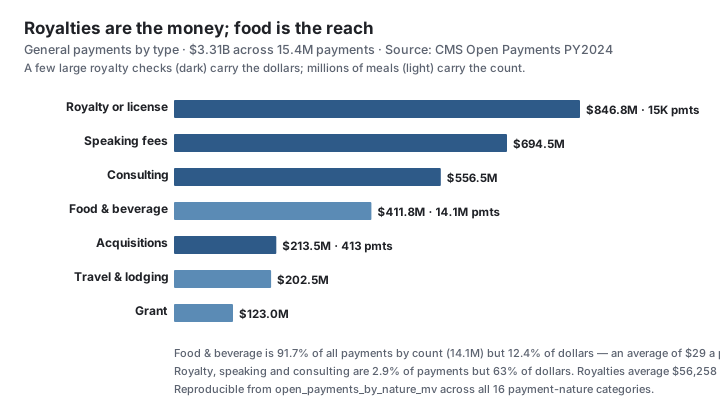
Nine in ten industry payments to U.S. doctors are food and drink. Together they add up to one-eighth of the money.
The full ledger, by type
All sixteen general-payment categories, ranked by total dollars:
| Payment type | Total (USD) | Payment count | Average |
|---|---|---|---|
| Royalty or license | $846,848,447 | 15,053 | $56,258 |
| Speaking fees (non-CME) | $694,537,282 | 238,656 | $2,911 |
| Consulting fee | $556,511,013 | 185,882 | $2,994 |
| Food and beverage | $411,750,206 | 14,101,484 | $29 |
| Acquisitions | $213,455,947 | 413 | $516,842 |
| Travel and lodging | $202,500,154 | 588,784 | $344 |
| Grant | $123,006,051 | 7,263 | $16,937 |
| Education | $67,045,121 | 151,641 | $442 |
| Honoraria | $43,422,896 | 16,448 | $2,640 |
| Debt forgiveness | $40,810,437 | 7,687 | $5,309 |
| Long-term device loan | $37,760,405 | 17,141 | $2,203 |
| Space rental (teaching hospital) | $33,805,521 | 7,511 | $4,500 |
| Faculty/speaker for CME program | $32,855,300 | 14,013 | $2,345 |
| Gift | $4,477,576 | 25,972 | $172 |
| Charitable contribution | $4,404,912 | 696 | $6,329 |
| Entertainment | $610,469 | 6,403 | $95 |
Source: CMS Open Payments PY2024, general payments only, via open_payments_by_nature_mv.
What the averages reveal
The "average" column is where the structure lives. Acquisitions averaged $516,842 — the highest per-payment value of any category — across only 413 payments, reflecting companies buying physician-owned practices and assets. Royalties averaged $56,258. At the other end, food and beverage averaged $29 and gifts $172. The file is not one stream of money; it is a handful of large, infrequent transfers to a small number of physicians sitting alongside tens of millions of small, frequent transfers to nearly a million.
The mismatch between payment count and payment value is the central fact of Open Payments. A ranking by count tells you about pharmaceutical marketing reach; a ranking by dollars tells you about device royalties and consulting relationships. They answer different questions and should never be conflated.The same shape as the drug market
This split echoes a pattern Fonteum found in Medicare drug spending. In our analysis of Medicare Part D prescribing, generic drugs were 76% of prescriptions but only 10% of the dollars, while brand-name drugs were 24% of prescriptions and 90% of the spending. Open Payments shows the marketing-side mirror: the cheap, high-volume activity (meals, generics) is where the count is, and the expensive, low-volume activity (royalties, brand drugs) is where the money is. In both files, counting transactions and counting dollars produce nearly opposite league tables.
The payment-type mix also explains why device makers, not drug makers, top the list of largest payers and why orthopedic surgeons are the highest-paid specialty: royalties are a device-and-surgeon phenomenon, and royalties are where the money is.
What one record actually is
Each row in cms_open_payments is one reported transfer of value, tagged by the paying company with one nature-of-payment code. A company that buys 14 million lunches files 14 million food-and-beverage rows; a company that pays one large royalty files one. Because the unit is the payment, the count column measures activity volume and the dollar column measures value — and this study reports both, side by side, for every category. No row is attributed to a named recipient here.
Methodology
All figures are aggregations over the cms_open_payments table, populated from the CMS Open Payments program-year-2024 release (PGYR2024, published 2026-01-23, RLS Pattern B — public read). The table holds 16,146,544 records; category totals are computed server-side in the open_payments_by_nature_mv and open_payments_overview_mv materialized views. "General payments" means records with record type general, excluding research and ownership. Categories use the CMS nature_of_payment field exactly as published; averages are total dollars divided by payment count per category. The exact query is in the reproducibility block below and on the Open Payments dataset page. Methodology version: open-payments/v1.
Limitations
- Snapshot, not a trend. Figures reflect the 2026-01-23 PY2024 release; CMS publishes annually and restates prior years.
- Self-classified categories. The nature-of-payment code is assigned by the reporting company; classification practices can vary between companies.
- General payments only. Research ($8.49B) and ownership ($147.8M) are excluded — this is the consulting / speaking / royalty / food / travel ledger.
- Gross transfers. A royalty reflects licensed intellectual property and a consulting fee reflects work performed; the dollar figure is the transfer, not net benefit.
- Disclosure, not influence, and aggregate-only. Category totals measure the structure of industry payments, not their effect on prescribing or care. No individual physician is named or surfaced.
Sources
- CMS — Open Payments (openpaymentsdata.cms.gov) — the federal disclosure database behind every figure in this study.
- CMS — Open Payments data dictionary and methodology — the nature-of-payment categories and reporting rules.
- Physician Payments Sunshine Act — 42 U.S.C. §1320a-7h — the statute requiring manufacturer disclosure.
- 42 CFR Part 403, Subpart I — Transparency Reports — the regulation defining reportable payment categories.
Frequently asked questions
- What kinds of payments does Open Payments track?
- Open Payments classifies every general (non-research) transfer of value into one of about sixteen payment-nature categories: food and beverage, travel and lodging, consulting fees, speaking fees, royalties or licenses, grants, education, honoraria, gifts, charitable contributions, acquisitions, and a few others. Each 2024 payment carries one nature code, reported by the paying company.
- What is the most common type of payment to doctors?
- Food and beverage, by a wide margin. Of 15.4 million general payments in 2024, 14.1 million — 91.7% — were food and beverage. These are the catered lunches and dinners sales representatives provide. But because each averages just $29, they account for only $411.8 million, or 12.4% of all general-payment dollars.
- Where does most of the money actually go?
- Into a small number of large payments. Royalties and licenses ($846.8M), speaking fees ($694.5M) and consulting ($556.5M) together are 63% of all general-payment dollars — yet only 2.9% of the payment count. The dollars and the payment counts live in almost completely different categories.
- Why are royalty payments so large?
- Royalties compensate physicians — usually surgeons — for intellectual property used in marketed devices and drugs. They are paid per recipient and can run for years, so the average royalty payment was $56,258, against $29 for a meal. Just 15,053 royalty payments moved more money than 14.1 million meals.
- What are acquisition payments?
- Acquisitions are transfers tied to a company buying a physician-owned business or its assets. Only 413 occurred in 2024, but they averaged $516,842 — the highest per-payment value of any category — and totaled $213.5 million. A single $91.1 million acquisition was the largest general payment in the entire file.
- Does a meal from a drug company change prescribing?
- This study does not test that. It measures the volume and value of each payment type, not their effect. Independent peer-reviewed research has examined associations between industry meals and prescribing, but Open Payments is a disclosure record. Nothing in this breakdown asserts that any meal, fee or royalty altered a clinical decision.
- Can I reproduce this payment-type breakdown?
- Yes. Every figure aggregates the cms_open_payments table (16,146,544 records, program year 2024) through the open_payments_by_nature_mv materialized view, which covers all sixteen payment-nature categories. The exact SQL is in the reproducibility block below. No individual physician is named.
Datasets used
Reproducibility
Every claim, reproducible
The SQL
-- What pharma actually buys: payment-type breakdown — reproducible query.
--
-- Source:   CMS Open Payments, program year 2024 (PGYR2024, published 2026-01-23).
-- Table:    public.cms_open_payments (16,146,544 records, RLS Pattern B — public read).
-- Scope:    General (non-research) payments only  (record_type = 'general').
-- Grain:    nature_of_payment (16 categories). No recipient named.
--
-- Reads open_payments_by_nature_mv; definition reproduced for audit.

-- All payment-nature categories, by total dollars (open_payments_by_nature_mv):
SELECT
  nature_of_payment                                AS nature,
  count(*)                                         AS payments,
  round(sum(total_amount_usd))::bigint             AS total_usd,
  round(sum(total_amount_usd) / count(*), 0)       AS avg_per_payment
FROM public.cms_open_payments
WHERE record_type = 'general' AND program_year = 2024 AND nature_of_payment IS NOT NULL
GROUP BY nature_of_payment
ORDER BY total_usd DESC;
--  Royalty or License                              846,848,447     15,053   56,258
--  Compensation for services other than consulting 694,537,282    238,656    2,911   (speaking, non-CME)
--  Consulting Fee                                  556,511,013    185,882    2,994
--  Food and Beverage                               411,750,206 14,101,484       29   <- 91.7% of payment count
--  Acquisitions                                    213,455,947        413  516,842   <- highest avg
--  Travel and Lodging                              202,500,154    588,784      344
--  Grant                                           123,006,051      7,263   16,937
--  Education                                        67,045,121    151,641      442
--  Honoraria                                        43,422,896     16,448    2,640
--  Debt forgiveness                                 40,810,437      7,687    5,309
--  Long term medical supply or device loan          37,760,405     17,141    2,203
--  Space rental or facility fees (teaching hosp.)   33,805,521      7,511    4,500
--  Compensation for faculty/speaker (CME program)   32,855,300     14,013    2,345
--  Gift                                              4,477,576     25,972      172
--  Charitable Contribution                           4,404,912        696    6,329
--  Entertainment                                       610,469      6,403       95

-- The two economies — share of count vs share of dollars:
WITH g AS (
  SELECT count(*) AS recs, sum(total_amount_usd) AS val
  FROM public.cms_open_payments
  WHERE record_type = 'general' AND program_year = 2024
)
SELECT
  -- food = 91.7% of payments, 12.4% of dollars
  round(100.0 * (SELECT count(*) FROM public.cms_open_payments
                 WHERE record_type='general' AND program_year=2024
                   AND nature_of_payment='Food and Beverage') / g.recs, 1)   AS food_count_pct,   -- 91.7
  -- royalty + speaking + consulting = 2.9% of payments, 63.3% of dollars
  round(100.0 * (SELECT sum(total_amount_usd) FROM public.cms_open_payments
                 WHERE record_type='general' AND program_year=2024
                   AND nature_of_payment IN (
                     'Royalty or License',
                     'Consulting Fee',
                     'Compensation for services other than consulting, including serving as faculty or as a speaker at a venue other than a continuing education program'
                   )) / g.val, 1)                                            AS top3_dollar_pct   -- 63.3
FROM g;
The snapshot
| dataset_id | cms-open-payments |
| snapshot_date | 2026-01-23 |
| sha256 | |
| doi | 10.5072/fonteum/open-payments-types-of-payments-2024 |
| slsa_provenance_url |
The JOINs
general_records   = count(*) where record_type='general'                       -- 15,385,047
food_count_share  = food_beverage_payments / general_records                   -- 14,101,484 / 15,385,047 = 91.7%
royalty_value     = sum where nature_of_payment='Royalty or License'           -- $846,848,447 (25.6% of dollars)
top3_value_share  = (royalty + speaking + consulting) / general_value          -- $2,097,896,742 / $3,313,801,737 = 63.3%
royalty_avg       = royalty_value / royalty_count                              -- $846,848,447 / 15,053 = $56,258
The pipeline version
| git_sha | |
| slsa_provenance | |
| methodology_version | open-payments/v1 |
Reproduce this
Run the exact query against the frozen 2026-01-23.
Cite this study
Citation-ready for researchers and AI.
Check the chain
Each figure is snapshot-attested — re-derive the hash from the federal file.
cms-open-payments · 2026-01-23SHA-256 a3f1c9…7e6b- FINANCIAL DISTRESS · JUN 2026Which companies pay U.S. doctors the most? Device makers, not pharmaIn 2024, drug and device companies disclosed $3.31 billion in general payments to U.S. physicians under the Sunshine Act — and the largest payers are device makers, not pharma. BioNTech led at $180.6 million from just 164 royalty payments; the top 25 of 1,763 reporting companies account for 52% of every general-payment dollar.
- FINANCIAL DISTRESS · JUN 2026Which medical specialties take the most industry money?In 2024, U.S. orthopedic surgeons received $381.4 million in general industry payments — more than any other specialty and over three times the second-place field. Counting spine, joint and sports-medicine subspecialties, orthopedics drew $531.8 million, about 16% of the $3.31 billion total. The average orthopedic payment was $1,711; the average internal-medicine payment was $96.
- FINANCIAL DISTRESS · JUN 2026Industry payments to physicians by state: where the money landsIndustry's $3.31 billion in 2024 general payments to physicians spread across 59 U.S. jurisdictions, but not in proportion to population. California led at $334.5 million, yet Pennsylvania ranked third and Massachusetts fourth on far fewer payments — Massachusetts averaged $1,031 per payment against Texas's $153. Where royalty recipients live, not where patients are, shapes the map.
- FINANCIAL DISTRESS · JUN 2026The OIG exclusion list, explained: who gets barred from Medicare, and whyThe OIG List of Excluded Individuals and Entities (LEIE) holds 68,055 active exclusions spanning 1977–2026. The most common reason to be barred from Medicare is not fraud — it is losing a state license: §1128(b)(4) license actions are 41% of the list. And only 10.3% of records carry an NPI, so the list is mostly non-clinicians.
- FINANCIAL DISTRESS · JUN 2026For-profit, nonprofit, or government: who owns America's hospitals, and which model makes moneyAcross 6,019 US hospitals in the federal HCRIS cost reports, for-profit facilities are the only ownership class earning a positive average operating margin — +0.19% — while nonprofit hospitals average −4.75% and government hospitals −62.38%. The ranking holds on every measure, but the gap is narrower than the averages suggest.
Federal source citations
Fonteum Research · June 12, 2026 · All figures trace to the frozen federal-data snapshot cited above.